Older Austin homes can have the location, trees and character that newer construction cannot reproduce. They can also hide expensive problems behind fresh paint. Before the option period ends, inspect the whole house, then use the property's age, construction, renovation history and visible condition to decide which specialists you need.
Short answer: Start with a Texas-licensed professional home inspector, but do not assume a general inspection answers every question. Depending on the property, you may also need a sewer camera, structural engineer, electrician, plumber, HVAC technician, roofer, pest inspection, pool inspection or lead-based paint evaluation. Check permits, drainage, insurance and the documents supporting any major renovation while you still have time to make a decision.
I am Leila Showery, an Austin REALTOR® with Compass, and my inspection strategy is simple: investigate the systems capable of becoming a five-figure surprise before spending all of the option period debating cosmetic items. A scratched floor may be annoying. A failed sewer line, major foundation movement or unsafe electrical work can change the entire purchase.
What does the option period actually let a buyer do?
Under the current TREC One to Four Family Residential Contract, an option period gives the buyer an unrestricted right to terminate by the deadline written into the contract. The deadline is 5:00 p.m. local time where the property is located on the final day of the option period.
That time is not just for scheduling an inspector. It is the window for completing the inspections, receiving reports, getting specialist opinions or estimates when needed, reviewing the seller's documents and deciding whether to proceed, renegotiate or terminate. TREC explains that buyers may inspect during the option period and the parties may negotiate an amendment, but the seller is not automatically required to make repairs.
Put the final deadline in your calendar as soon as the contract is effective. Work backward from it. A report delivered late on the last day does not leave much time to call a structural engineer or price a sewer replacement.
Is a general home inspection enough?
It is the starting point, not a guarantee and not a specialist evaluation of every system.
Texas-licensed real estate inspectors follow TREC Standards of Practice. They inspect and report required visible and accessible components of the structure, electrical, plumbing, HVAC and other systems. Those standards also have limitations. Inspectors generally do not open walls, calculate the remaining life of every component or perform every technically invasive test.
An experienced inspector can identify conditions that deserve more investigation. The buyer then has to act quickly. If the report recommends a structural engineer, licensed electrician or sewer camera, do not wait until the option period is almost over to make the call.
What should you inspect in an older Austin home?
1. Foundation and drainage
Austin has multiple soil conditions, and older homes have often experienced decades of movement, additions, plumbing work and changing drainage patterns. Look beyond a few drywall cracks. Pay attention to floor slope, sticking doors, separated trim, exterior cracking, site grading, gutters, downspout discharge, standing water and erosion.
A general inspector can document visible indicators, but a structural engineer is the right professional when the condition needs an engineering opinion. If previous foundation work is disclosed, request the engineer's report, repair plan, warranty, invoices and any follow-up evaluation. Confirm whether the warranty transfers and what it actually covers.
Drainage belongs in the same conversation. A repaired foundation does not solve water that still moves toward the house.
2. Sewer line and under-slab plumbing
The private wastewater line connecting a house to the public system can become a major owner expense. Austin Water identifies this connection as a private lateral, and property owners are generally responsible for private yard lines and plumbing on their side of the system.
For many older homes, a sewer camera is one of the most useful add-on inspections. It may reveal roots, offsets, bellies, cracks, deterioration or a partial replacement that stops before the city connection. Ask what material was visible, how far the camera traveled and whether the entire accessible line was examined.
A hydrostatic test is different from a sewer camera and can carry a risk of damage. TREC provides an addendum addressing authorization, payment and responsibility for damage when the parties agree to hydrostatic testing. Do not order that test casually. Confirm the contract authorization and discuss the property-specific risks with the appropriate professionals.
3. Electrical system
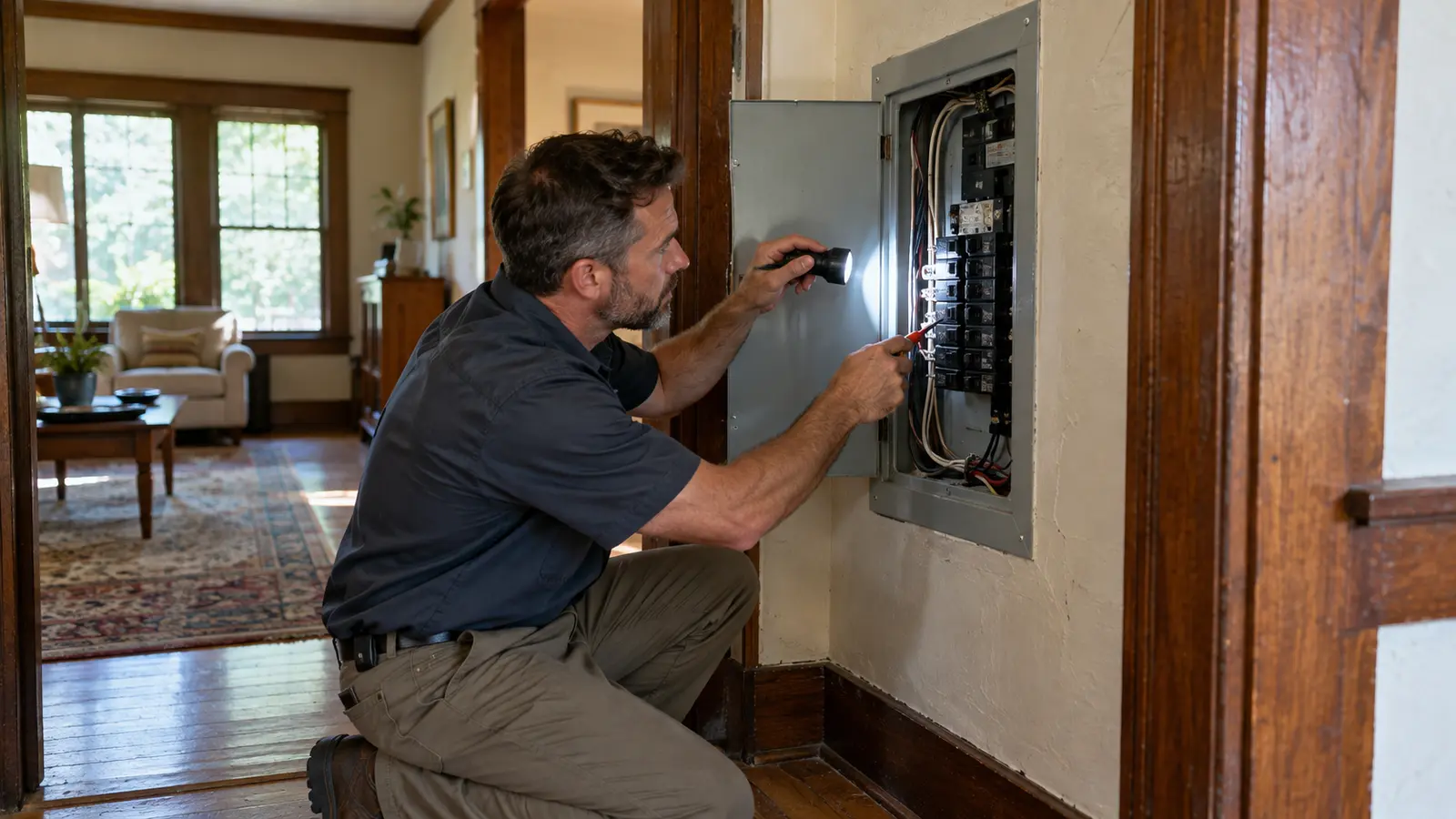
Older Austin houses may have a mix of original wiring, later additions and partial upgrades. The electrical panel is only one piece of the review. Ask the inspector to identify visible wiring types, grounding and bonding concerns, panel deficiencies, unsafe connections, GFCI/AFCI protection where applicable and evidence of work that does not match the rest of the system.
If the inspector flags the panel, older branch wiring or amateur-looking changes, bring in a licensed electrician. You want to know the difference between a straightforward correction and a broader rewiring project. You also want an insurance quote early. The Texas Department of Insurance says insurers may consider the physical condition of components such as wiring, plumbing, HVAC and roofing, even though a company cannot deny or nonrenew a policy solely because of the age of the house or roof.
4. Water supply, drains and water heater
Identify the visible supply and drain materials, look for corrosion or active leaks and check water pressure, fixture performance and signs of past repairs. In an older house, mismatched plumbing can tell a story: one remodeled bathroom does not mean the rest of the supply or drain system was replaced.
Ask where the main shutoff is, whether the water heater is properly installed and vented, and whether old or abandoned lines remain. If the home has galvanized supply pipes, cast-iron drains or evidence of recurring backups, a licensed plumber can help define the scope before you commit.
5. Roof, attic and insurance implications
Do not stop at the seller's statement that the roof is “newer.” Request the permit when applicable, invoice, warranty and installation date. The inspection should look for visible wear, flashing problems, penetrations, drainage, damaged decking and signs of leakage in the attic.
Also review attic ventilation, insulation, moisture, visible framing changes and whether bathroom or dryer exhaust terminates properly. If the inspector cannot safely access the roof or sees damage, a qualified roofer may be needed.
Ask your insurance agent how the roof will be covered. TDI explains that some policies pay roof losses on a replacement-cost basis while others may use actual cash value, which can leave the owner with more out-of-pocket cost.
6. HVAC, gas and combustion safety
Test the heating and cooling equipment in the conditions allowed by the inspection. Confirm the age of the units, visible installation quality, temperature performance, drainage, accessible ductwork and signs of past leakage.
For gas systems, pay close attention to visible defects, venting and combustion concerns. An older furnace or water heater can appear functional while still needing correction. If the inspector recommends further evaluation, use a licensed HVAC contractor or plumber as appropriate.
7. Termites, wood damage and moisture
Older homes may show previous termite treatment, damaged framing, rot or moisture intrusion. A wood-destroying insect inspection is separate from a normal general inspection unless specifically included. Ask about active evidence, prior damage and conditions that invite future problems, including wood-to-soil contact and chronic moisture.
If damaged wood is found, determine whether the issue is cosmetic, structural or still active. Replacing trim is different from repairing framing concealed behind a wall.
8. Additions, conversions and renovation permits
Fresh finishes do not prove that the work was permitted or completed correctly. Compare the current layout with the seller's disclosure, survey, appraisal-district information and City records. Look closely at converted garages, enclosed porches, added bathrooms, studios, accessory units, moved walls and expanded kitchens.
The City of Austin Property Profile can show property information and links to permit history, FloodPro and other records. The City's AB+C Public Search is another starting point for permits and case history. A permit number alone is not enough. Check the scope, related trade permits, inspections and final status.
Missing permits do not automatically tell you the quality of the work, and a clean-looking permit search does not certify the house. It does tell you which questions still need answers. My guide to buying or selling an Austin home with unpermitted work explains what to review next.
9. Lead-based paint and other age-specific materials
Most pre-1978 housing is subject to federal lead-based paint disclosure requirements. EPA says a buyer who wants to know whether lead is present should hire a certified lead-based paint inspector or risk assessor. A standard home inspection is not the same thing as a lead inspection.
Lead-based paint is not automatically a reason to reject an older home. Its condition, planned renovations and the people who will occupy the property matter. Deteriorating paint and renovation dust require particular attention. Buyers should review the disclosure and EPA materials and consult qualified professionals if testing or risk assessment is appropriate.
Depending on the age and construction, also ask professionals about materials such as asbestos-containing products. Do not disturb a suspect material simply to inspect it.
10. Floodplain, drainage and the exact lot
Check the exact address, not just the neighborhood. The City of Austin's FloodPro tool provides floodplain and storm-drain information, but a map does not replace observing the site or evaluating actual drainage.
Walk the exterior after rain if the timing works. Look for low areas, water marks, erosion, retaining-wall issues and discharge from neighboring lots. Review the survey, easements and improvements near property lines. If flood exposure or drainage is a concern, obtain the appropriate professional and insurance guidance before the option deadline.
What documents should you request while inspections are happening?
Ask for the records that support the story being told about the house:
- Seller's disclosure and any updates
- Previous inspection reports the seller is providing
- Foundation reports, repair plans and transferable warranties
- Roof invoice, permit and warranty
- HVAC, plumbing and electrical invoices
- Renovation plans, permits and final inspections
- Insurance claim information disclosed by the seller
- Termite treatment records and warranties
- Survey and title documents
- HOA or condominium documents when applicable
No single document replaces your own due diligence. An old invoice proves that someone billed for work. It does not necessarily prove the entire system was replaced or that the work remains in good condition.
How should you prioritize the inspection report?
I separate the findings into four groups:
- Safety and active damage: electrical hazards, gas concerns, leaks, structural issues or conditions actively worsening
- Large financial exposure: foundation, sewer, roof, HVAC, major plumbing and electrical work
- Insurance or financing concerns: items that may affect coverage, underwriting, appraisal or lender requirements
- Maintenance and cosmetic items: normal ownership work that may not justify reopening the deal
Then I compare the findings with the price, seller disclosures, competing offers, the buyer's cash after closing and the home's location. The goal is not to make an old house behave like a new one. The goal is to understand what you are buying and avoid paying a finished-home price for unfinished risk.
What can a buyer do after the inspection?
Depending on the contract, timing and findings, a buyer may proceed as written, request repairs, ask for a seller credit or price adjustment, renegotiate another term, or terminate within the option period. The seller can accept, reject or counter a repair request.
The strongest requests are specific and supported. Instead of sending every line of a long report, focus on the items that materially change safety, cost, insurability or the value of the home. Get estimates when time allows, but do not miss the option deadline while waiting for perfect information.
If you are preparing to buy, review my Austin home-buying process, frequently asked questions and current Austin home search. Leila Showery helps buyers structure the inspection period, coordinate specialists and negotiate the findings without losing sight of the entire deal. You can also read more about Leila Showery, see her Austin real estate reviews, or contact Leila to plan your purchase.
Interested in working together? DM me or email leila.showery@compass.com.
This article provides general information, not legal, engineering, inspection, environmental, insurance or lending advice. Inspection needs and contract rights depend on the property and signed documents. Confirm deadlines and decisions with the appropriate licensed professionals.
Frequently asked questions
Should I get a sewer scope on an older Austin home?
It is often worth considering, especially when the home has older drain materials, mature trees, recurring backups or an unknown replacement history. A sewer camera can help identify visible roots, offsets, cracks and deterioration that a general home inspection may not reveal.
When should I hire a structural engineer?
Consider an engineer when the general inspection identifies movement or structural concerns, the house has significant floor slope or cracking, or the property has previous foundation repairs that need an independent engineering opinion.
Does a remodeled Austin home still need a detailed inspection?
Yes. New finishes can cover old systems, and a renovation may include a mix of permitted, unpermitted, completed and unfinished work. Review the physical condition and the records supporting additions, layout changes and system upgrades.
Can the seller refuse to make inspection repairs?
Generally, a buyer can request repairs or other changes, but the seller does not automatically have to agree. The buyer's rights depend on the signed contract and whether the option period remains open.
What time does the Texas option period end?
Under the current TREC One to Four Family Residential Contract, the option period ends at 5:00 p.m. local time where the property is located on the final day stated in the contract.
